
Transitioning your cat to daily fresh food
This guide explains how to move from taste testing to a full daily routine, at the right pace for their digestive system.
Why the pace of change matters
Cats are biologically different from dogs. Their digestive system and behaviour make food changes more stressful, so a slower transition helps maintain appetite and comfort.
Obligate carnivores
Cats thrive on protein and moisture, not carbohydrates. Moving to a moisture-rich, meat-based diet is a positive but significant change.
Creatures of habit
Cats often prefer familiar textures, aromas, temperatures, and feeding routines. Food transitions are behavioural as well as digestive.
Strict appetite thresholds
Cats eating less than 50% of their usual intake for 48 hours may be at risk of hepatic lipidosis. Appetite always comes before speed.
Reduced food intake increases the risk of hepatic lipidosis. Follow the Clinical schedule, contact us if appetite drops, and avoid rushing the transition.
How to switch to fresh food
Cats are suspicious creatures. Slow wins. Mix increasing Wundercat with decreasing current food across thirteen days. Most cats settle in by day ten. You'll notice it in the coat, the energy, and the litter tray.
Seniors, kittens, or cats with medical conditions follow a slower plan — pick the schedule that fits in the day-by-day section below.
Day-by-day transition
Cats adapt at different paces. Wundercat offers four schedules so you can match the transition to your cat's age and history. Choose the one that fits, then follow the day-by-day plan.
| Days | Old food | New food | What to watch for |
|---|---|---|---|
| 1–3 | 90% | 10% | Minimal change; sniffing normal; stable appetite. |
| 4–6 | 75% | 25% | Microbiome begins; slower eating ok; mild stool softening. |
| 7–9 | 50% | 50% | Peak adaptation; monitor vomiting; firm stools required. |
| 10–12 | 25% | 75% | Digestion stabilises; lower water intake expected. |
| 13+ | 0% | 100% | Fully transitioned; monitor for two weeks. |
Appetite is always the priority. If your cat's intake drops by more than 20%, hold the current ratio for two to three extra days before advancing. If intake drops below 60% of normal, switch to the next slower schedule and contact us. WhatsApp +971 50 229 8869.
Small habits that make the switch easier
Small habits during the switch make a meaningful difference to how quickly and comfortably your cat adapts.
Mix thoroughly
Always combine both foods in one bowl. Cats offered two separate options will often pick one and leave the other.
Serve at the right temperature
Aim for 30 to 35°C. Add a splash of warm water or rest the bowl inside a larger bowl of hot tap water for a few minutes. Never microwave.
Use a flat, wide bowl
Ceramic or stainless steel. Deep bowls press against the whiskers and cause enough discomfort to put a cat off eating, even when they are hungry.
No new treats
Avoid introducing new treats or supplements during the transition. Keeping all variables constant means you can read appetite signals clearly and accurately.
Appetite first, always
If your cat's intake drops at any stage, pause and hold the current ratio. A settled appetite matters more than keeping to the schedule. Never rush.
Play before meals
Three to five minutes of active play before feeding mimics the hunt sequence, primes appetite, and leads to noticeably better engagement at the bowl.
Keep location consistent
Do not move the feeding spot during the transition. Cats treat location as part of their feeding routine and a change alone can trigger refusal.
Maintain total calories
The daily gram amounts should stay consistent across the transition. Do not feed less overall simply because you are introducing a new food alongside the old one.
Cat won't try it? We also have a guide for that.
Ten tips, drawn from how cats actually behave around food, for getting picky cats to try fresh. Vet-reviewed. Real-cat tested.

How much to feed each day
These are starting guidelines based on body weight. Adjust based on your cat's body condition, activity level, and whether they are an indoor or outdoor cat.
| Cat weight | Daily amount (1 pouch = 80g) | Meals/day |
|---|---|---|
| 2 kg | 70–90g (1 pouch) | 2–3 |
| 3 kg | 90–115g (1–1½ pouches) | 2–3 |
| 4 kg | 115–145g (1½–2 pouches) | 2–3 |
| 5 kg | 140–175g (2–2½ pouches) | 2–3 |
| 6 kg | 165–200g (2–2½ pouches) | 2–3 |
| 7 kg | 185–225g (2½–3 pouches) | 2–3 |
| 8 kg | 210–255g (3½–4 pouches) | 2–3 |
Overweight cats: use ideal body weight, not current weight, to calculate portions. Kittens under one year: 3 to 4 meals daily. Senior cats over ten years: 2 to 3 smaller meals to support steady appetite and consistent hydration.
If your cat hesitates at any phase, hold the current ratio for two to three extra days before advancing.
Thaw overnight
Move the food from freezer to fridge the evening before. Never defrost on the counter or in water. Once thawed, use within 48 to 72 hours. Do not refreeze once thawed.
Remove uneaten food
Pick up any uneaten food within 30 to 45 minutes. Do not leave fresh food out, particularly in warm conditions. Discard if smell has changed or edges are dry. Do not re-offer.
Bring to room temperature
Add a splash of warm water, or place it in a bowl inside a larger bowl of hot tap water for three to five minutes. This brings it to the ideal serving range. Never microwave directly.
What you’ll notice. What it means.
Many of the changes you observe in the first two weeks are normal physiological responses to the switch. Here is what to expect and what to act on.
Normal — no action needed
- Sniffing the bowl for longer before eating
- Slightly softer stools for 24 to 48 hours
- Darker stool colour from organ meat content (normal if stool remains firm)
- Mild stool colour change
- Drinking noticeably less water (the food provides 74 to 77% moisture)
- Litter box frequency changing by roughly one visit per day
- Slightly smaller stool volume due to higher digestibility
- Increased urination is possible and generally normal
Pause — slow the transition
- Soft stool lasting more than 48 hours: revert to the previous ratio for three days
- Appetite drop of more than 20%: hold current ratio until appetite fully recovers
- Single vomiting episode: hold ratio and monitor for 24 hours before advancing
- Significant increase in hairball vomiting: pause and hold
- Consistently leaving more than half the bowl or eating noticeably more slowly
Contact us or your vet
- Complete food refusal for more than 24 hours
- Eating less than 50% of normal calories for 48 hours
- Repeated vomiting within any 24-hour period
- Watery diarrhoea or blood in stool
- Straining in the litter box or no stool for more than 48 hours
- Lethargy, hiding, or significantly reduced grooming
- Yellowing of gums or eyes: seek vet care immediately
Multi-cat household guidance
Transitioning in a multi-cat home requires a little more structure. Each cat adapts at a different pace, and shared feeding makes individual intake almost impossible to monitor accurately.
During the transition
- Feed each cat separately in a different room or at a different time.
- Do not allow cats to access each other's food during meals.
- Monitor each cat's intake individually. A cat eating the other's food will appear to be doing well while the other goes without.
- Do not assume a quiet litter box means all cats are eating normally. Verify directly.
The feeding environment
- Feed in a quiet area away from noise, foot traffic, and other animals.
- Each cat should have their own fixed feeding spot they can return to.
- Competition at the bowl suppresses appetite and can delay transition significantly.
- Once all cats are fully transitioned, supervised group feeding can be trialled, but separate bowls remain best practice.
Checking your cat's body condition
Portions are starting points, not fixed targets. Check body condition every two to three weeks during and after the transition. Adjust food if body weight changes by more than 5% in either direction.
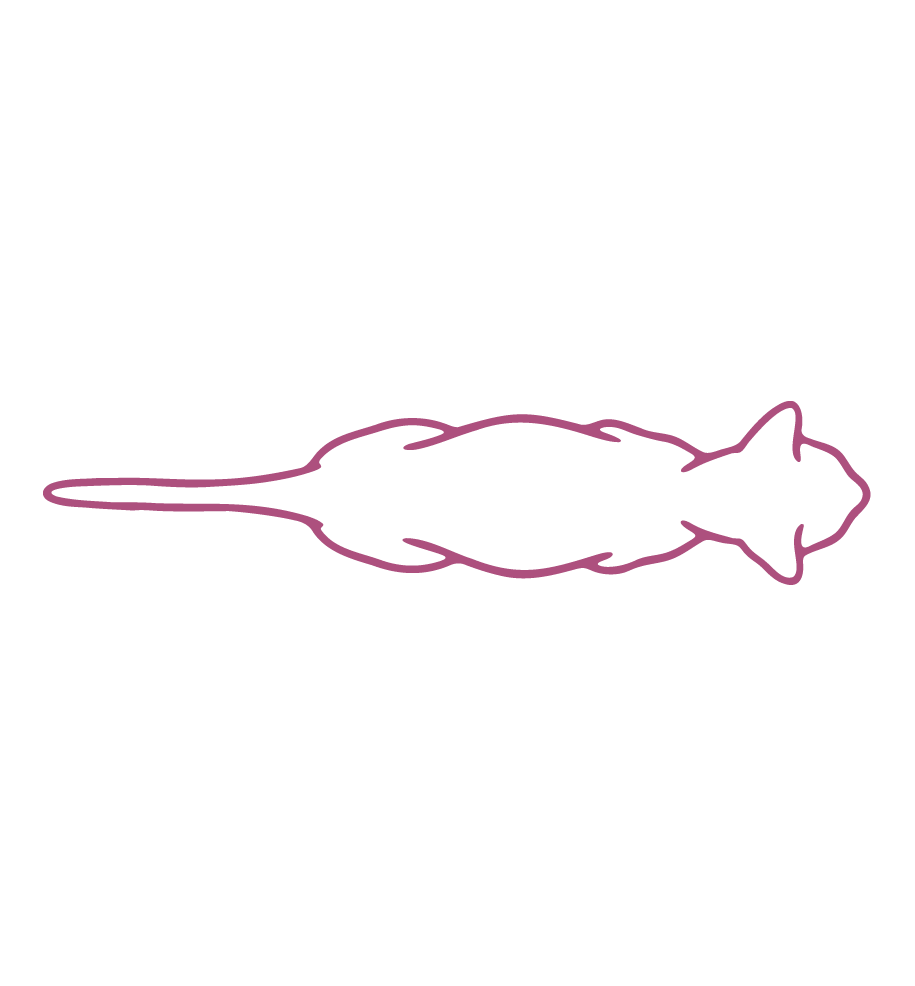
Body weight
Weigh on the same scale at the same time of day. A 5% change up or down is the threshold for adjusting portions.
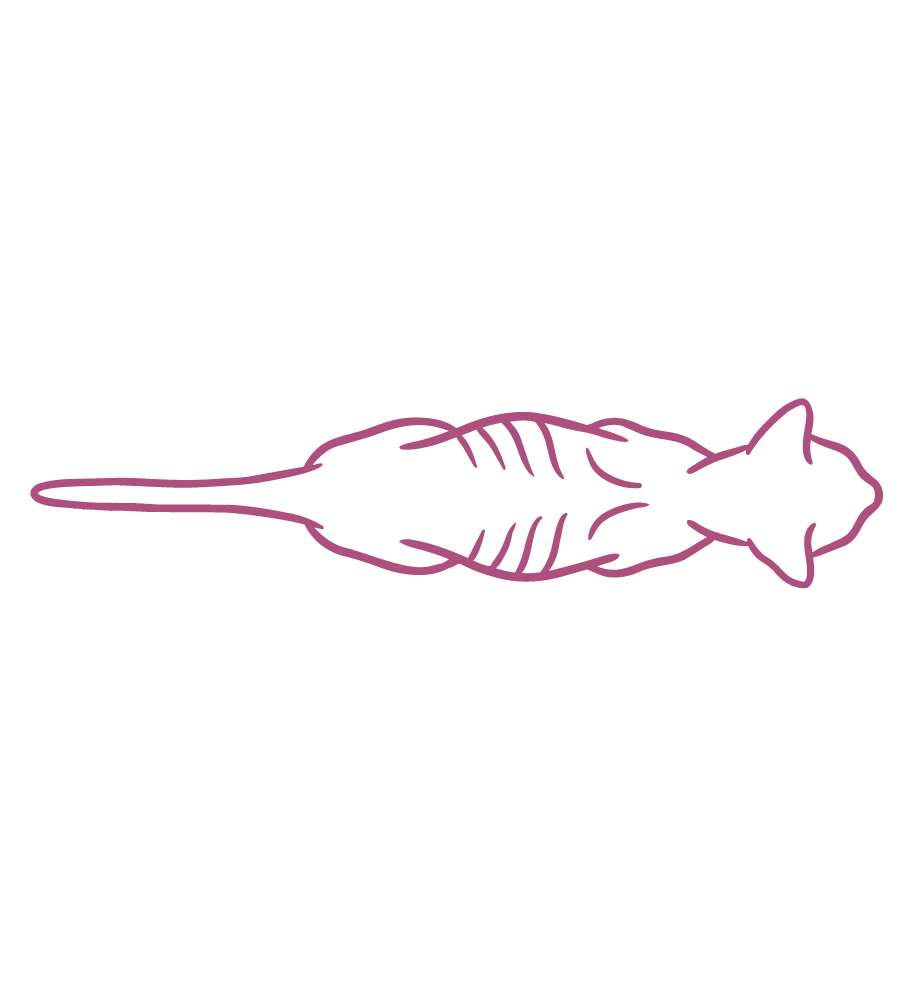
Rib coverage
You should feel the ribs easily with light pressure but not see them clearly. Prominent ribs suggest underfeeding.
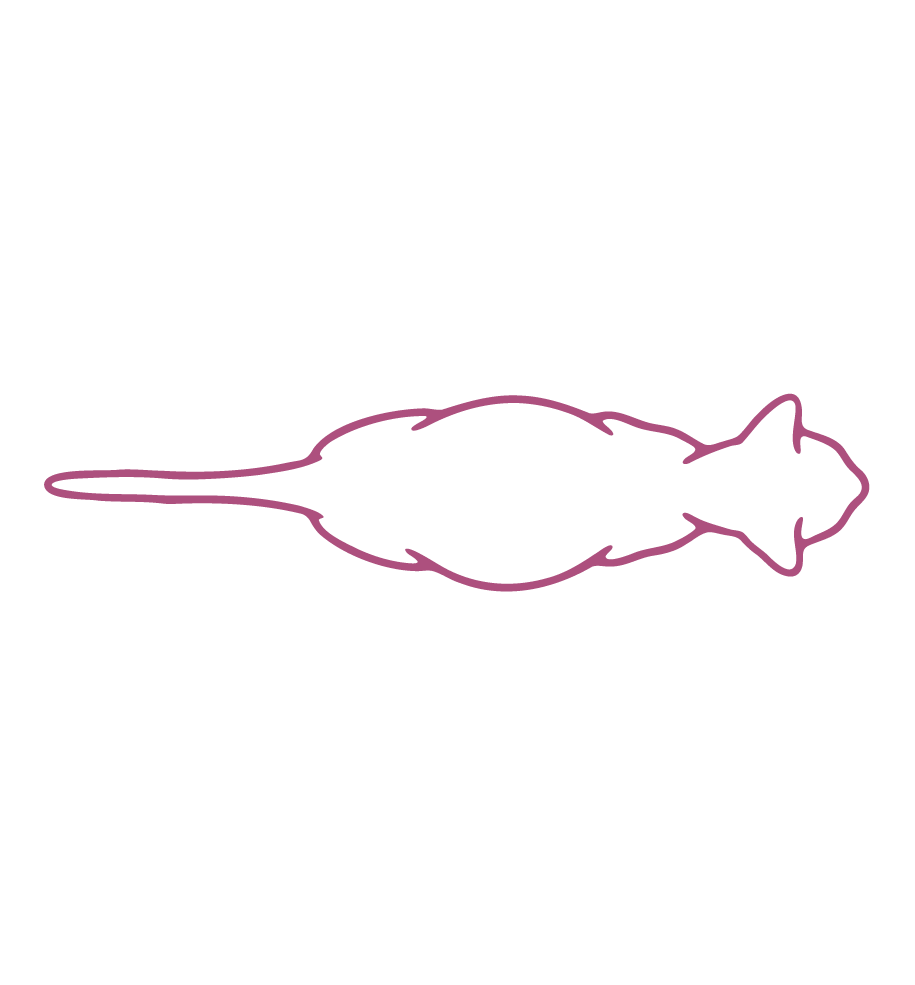
Waist visibility
Viewed from above, there should be a visible narrowing behind the ribs. No visible waist may indicate overfeeding.
A question about the transition?
Our nutrition team and in-house vet are available six days a week. Every cat transitions differently. If you're unsure about appetite changes, toppers, portions or anything you're observing, reach us directly.